
For months, the Middle East has been closely watching the tensions between the United States and Iran. While geopolitical uncertainty often creates concern across financial markets, history has shown that periods of stabilization frequently unlock new investment opportunities.
As discussions around a potential long-term agreement continue to gain momentum, investors are already asking an important question:
What could the end of the U.S.Iran conflict mean for Dubai’s real estate market?
How Regional Stability Influences Real Estate Markets
Real estate markets are shaped by more than supply and demand. Investor confidence, economic outlook, and regional stability all play an important role in determining where capital flows.
When geopolitical tensions rise, investors often become more cautious, delaying major decisions until there is greater clarity. Conversely, periods of stability tend to encourage business expansion, cross-border investment, and long-term financial planning.
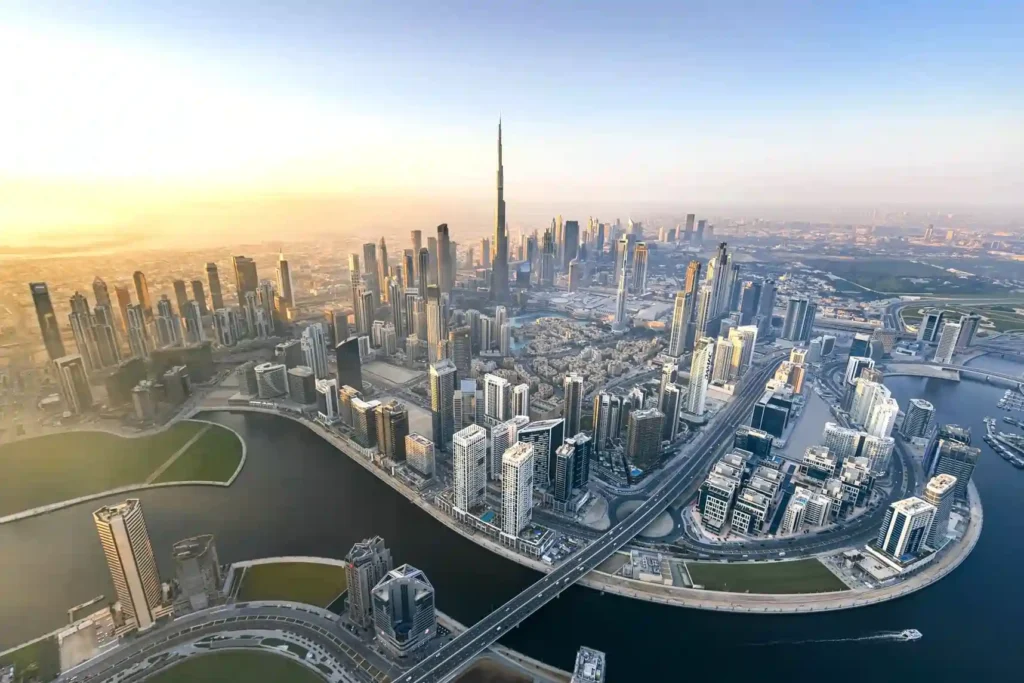
For Dubai, this dynamic is particularly important. As a global business hub connecting East and West, the city benefits from an environment that supports trade, tourism, entrepreneurship, and international investment.
A reduction in regional tensions could contribute to stronger market sentiment across the Middle East, encouraging investors and businesses to move forward with projects and investment decisions that may have been postponed during periods of uncertainty.
What This Could Mean for Dubai Real Estate
While Dubai’s property market is supported by strong fundamentals including population growth, infrastructure investment, and international demand greater regional stability could provide an additional boost to confidence.
This may translate into:
- Increased interest from international investors seeking long-term opportunities.
- Greater business activity and corporate expansion within the region.
- Continued demand for residential and commercial property.
- Stronger confidence among buyers considering large-scale investments.
Rather than creating a new real estate trend, a more stable geopolitical environment could reinforce the factors that have already made Dubai one of the world’s most attractive property markets.
Dubai’s Position as the Region’s Safe Haven
Throughout periods of regional uncertainty, Dubai has maintained its reputation as one of the world’s most resilient investment destinations. Its stable government, strong regulatory framework, tax-efficient environment, and strategic location continue to attract global capital. Even during recent geopolitical tensions, Dubai remained a preferred destination for entrepreneurs, investors, and high-net-worth individuals seeking stability.
The Short-Term Reality: Market Caution
Like any major geopolitical event, the conflict created temporary caution among investors. Transaction volumes slowed during the peak of regional uncertainty, and some buyers adopted a wait-and-see approach. Market sentiment was influenced more by perceived risk than by changes in Dubai’s underlying fundamentals. (Reuters)
However, Dubai’s appeal was never solely based on regional dynamics. Its global connectivity, lifestyle offering, residency programs, and business-friendly policies continue to drive demand from international buyers. (Daark)
What Happens When Stability Returns?
Recent progress in diplomatic discussions between Washington and Tehran has already improved investor confidence across Gulf markets. Stock markets in Dubai and across the region reacted positively to signs of de-escalation, while global investors welcomed the reopening of key trade routes and reduced energy market uncertainty. (Reuters)
For real estate, this could trigger three major trends:
1. Renewed International Capital Inflows
When uncertainty decreases, global investors tend to return quickly to markets with strong fundamentals. Dubai’s real estate sector remains one of the most accessible luxury property markets globally, offering attractive rental yields and long-term growth potential. (Daark)
2. Increased Demand for Prime Assets
Luxury waterfront residences, branded developments, and trophy properties are likely to benefit first. Historically, affluent investors prioritize premium assets when confidence returns to the market. (Throne Properties)
3. Strengthening Dubai’s Global Position
A more stable Middle East could reinforce Dubai’s role as the region’s financial, tourism, and business capital. As international companies expand regional operations, demand for residential and commercial real estate is expected to remain strong. (Reuters)
The Bigger Picture
The real story is not whether Dubai survives geopolitical challenges—it consistently has. The more important question is how Dubai leverages periods of stabilization to strengthen its position on the global stage.
While geopolitical events may create temporary fluctuations, the city’s long-term fundamentals remain intact: world-class infrastructure, a growing population, business-friendly regulations, and continued international demand. (Reuters)
Final Thoughts
For investors looking beyond today’s headlines, a lasting resolution between the United States and Iran could mark the beginning of a new phase of confidence across the region.
And if history is any indication, Dubai is likely to remain one of the primary beneficiaries.
In a world searching for stability, opportunity, and long-term value, Dubai continues to prove why it remains one of the most compelling real estate markets on the planet.
Whether you’re seeking a primary residence, a strategic investment, or access to the city’s most exclusive opportunities, our team is here to guide you every step of the way.