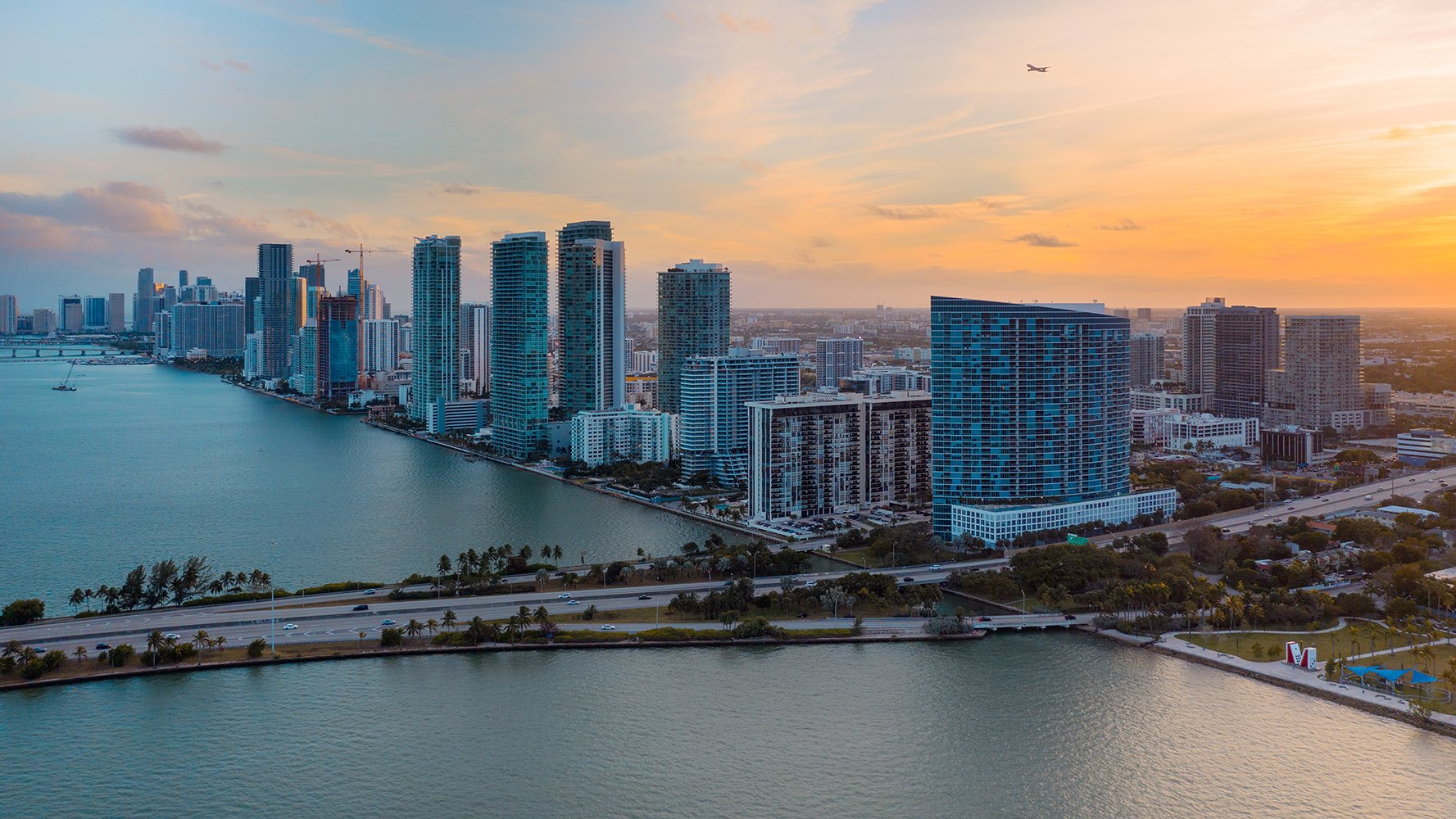


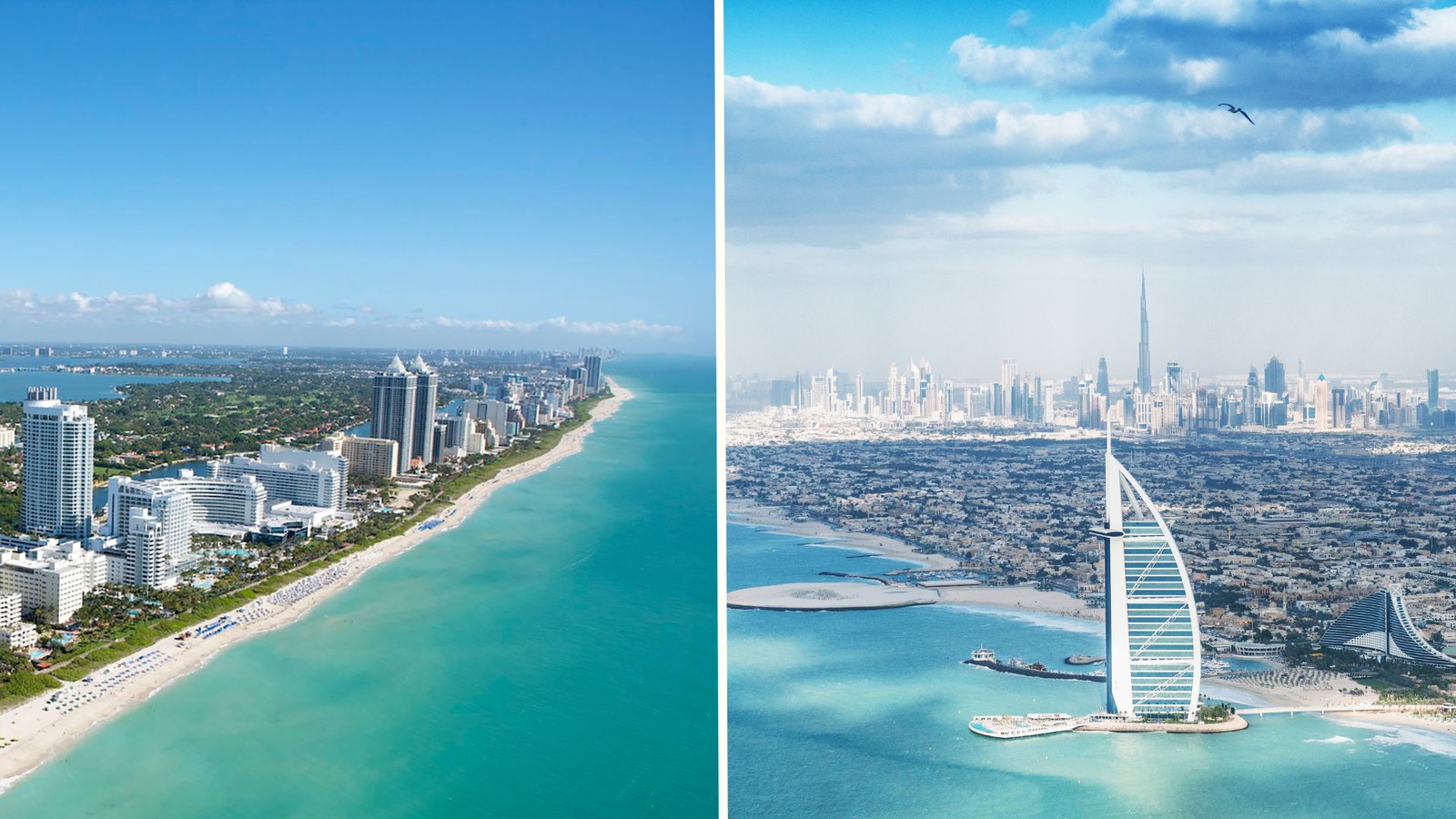
Two Cities, Two Ways of Living
A second home is rarely just another property purchase. It can be a personal retreat, a base for international business, a place to spend more time with family, or a long-term asset within a broader wealth strategy.
For internationally minded buyers, Miami and Dubai offer two distinctive propositions.
Miami combines a coastal lifestyle, an established American property market, and access to the wider United States. Dubai offers an international business environment, contemporary residential developments, and a lifestyle shaped by global connectivity and modern urban amenities.
Both cities have luxury residences, waterfront properties, premium services, and neighbourhoods that attract international buyers. Yet they differ in their ownership costs, legal frameworks, tax considerations, rental dynamics, and everyday experience.
So, which city deserves a place in your second-home portfolio?
The answer depends less on which destination appears more glamorous and more on how you intend to use the property.
1. Lifestyle: Coastal Living or Cosmopolitan Convenience?
Miami: A home shaped by the outdoors
Miami appeals to buyers who value the relationship between indoor and outdoor living. Waterfront residences, private pools, marinas, beaches, terraces, and access to dining and cultural experiences can all form part of the appeal.
Neighbourhood choice matters considerably. Brickell offers an urban environment with residential towers and business amenities. Miami Beach appeals to buyers seeking proximity to the ocean and a resort-like atmosphere. Coral Gables and Coconut Grove offer different residential settings, including tree-lined streets and more established neighbourhoods.
Miami can be particularly attractive if your professional, family, or leisure activities are already connected to the United States or the Americas.
However, buyers should consider Florida’s climate risks, hurricane exposure, property insurance availability, building resilience, and the practical costs of maintaining a property in a coastal environment.
Dubai: Contemporary living with global connectivity
Dubai appeals to buyers who value modern architecture, international business connections, high-rise living, and residential communities built around amenities and services.
Depending on the neighbourhood, a property may offer access to beaches, marinas, golf courses, shopping, restaurants, or major business districts. Dubai Marina, Downtown Dubai, Palm Jumeirah, and other established communities offer different combinations of urban convenience, waterfront living, and resort-style amenities.
For frequent travellers and business owners with international commitments, Dubai’s location can also be a practical consideration.
The trade-offs include extreme summer heat, reliance on air-conditioned environments, traffic in some areas, and the need to evaluate service charges and building management carefully.
The question to ask yourself: Which city would you genuinely want to return to several times a year—not simply visit for a long weekend?
2. Ownership: What Can an International Buyer Purchase?
Both markets are accessible to many foreign buyers, but the applicable ownership rules differ.
Buying in Miami
Foreign nationals can generally purchase residential property in Florida, subject to applicable laws and restrictions. However, the legal structure, financing, reporting requirements, and tax consequences may differ depending on the buyer’s citizenship, residency, and ownership vehicle.
The purchase process should include a review of title, property disclosures, condominium documents where relevant, insurance, and any restrictions affecting the intended use of the home.
Foreign buyers should also obtain advice on potential US tax and estate-planning implications before deciding whether to purchase personally or through an entity.
Buying in Dubai
Foreign nationals can acquire freehold ownership in Dubai’s designated foreign-ownership areas, subject to the applicable legal framework. Ownership and registration should be verified through the relevant authorities, including the Dubai Land Department.
Buyers should confirm the property’s ownership status, registration details, service-charge obligations, and any applicable restrictions before signing.
Important distinction: Purchasing property does not automatically grant immigration status, residency rights, or a particular tax treatment in either destination. Eligibility depends on separate rules and individual circumstances.
3. The Financial Equation: Purchase Price Is Only the Beginning
Comparing headline prices alone can produce a misleading result.
A second home generates expenses whether you occupy it every month or only visit for a few weeks each year. The relevant figure is the total cost of acquiring, maintaining, managing, and eventually selling the property.
| Cost category | Miami | Dubai |
| Acquisition | Closing costs, title-related expenses, and applicable taxes or fees | Registration and transfer-related fees, agency charges, and applicable costs |
| Ongoing ownership | Property taxes, insurance, condominium fees, maintenance | Service charges, maintenance, utilities, insurance, and applicable fees |
| Property management | Remote management, maintenance, and vacancy management | Remote management, maintenance, and vacancy management |
| Property-specific risks | Insurance availability, storm exposure, building condition, and assessments | Service-charge changes, building management, maintenance, and competing supply |
| Currency exposure | Particularly relevant to buyers whose finances are in another currency | Particularly relevant to buyers whose finances are in another currency |
Actual costs vary significantly by property, building, transaction, and buyer circumstances. In Florida, a permanent-residence homestead exemption may be available to qualifying owners, but buyers should not assume that a second home qualifies. Dubai’s fee structure and the applicable charges should likewise be verified for the specific transaction.
For a fair comparison, request an itemised estimate for each property and calculate the expected annual cost under the same assumptions.
A simple way to compare the two
For each property, estimate:
- Total cash required to purchase.
- Annual taxes, service charges, insurance, and maintenance.
- Furnishing and property-management costs.
- Expected occupancy and realistic rental income, if applicable.
- Likely transaction costs when selling.
- The impact of exchange-rate movements on your budget.
A property with a lower purchase price may have higher ongoing expenses. Another may be more expensive initially but better suited to your intended use.
The objective is not to identify the cheapest property. It is to understand which property offers the strongest overall fit for your finances and lifestyle.
4. Rental Potential: Will Your Second Home Generate Income?
Some buyers want a home that is available whenever they travel. Others expect rental income to offset some of the cost of ownership.
These objectives can conflict.
A property reserved for personal use may not be available during the periods when rental demand or achievable rates are strongest. A property managed primarily as a rental may also involve additional furnishing, maintenance, guest coordination, and management expenses.
Miami rental considerations
Assess the specific neighbourhood, comparable rental properties, seasonal demand, condominium rules, local requirements, and insurance and operating costs.
Do not assume that a residential property can automatically be rented for short stays. Local regulations, condominium restrictions, and other applicable requirements may limit how it can be used.
Dubai rental considerations
Evaluate the location’s tenant profile, competing supply, service charges, management arrangements, and the rental rules applicable to the property and intended letting strategy.
If considering short-term accommodation, verify the relevant licensing and regulatory requirements rather than relying solely on projected nightly rates.
In both cities, compare net income, not just gross rental yield.
A useful model should account for vacancy, management fees, maintenance, operating expenses, and the periods when the property is unavailable for rent.
Rental income should be treated as an estimate, not a guarantee.
5. Long-Term Value: What Makes a Property Resilient?
The value of a luxury property is influenced by more than its address or design.
Location, quality of construction, building management, access to amenities, supply, financing conditions, and the number of potential future buyers all matter.
For Miami, buyers should pay particular attention to the physical condition of the building, reserve funding, condominium assessments, insurance, and exposure to weather-related risks. A prestigious waterfront address does not eliminate these considerations.
For Dubai, examine the developer’s track record, the quality of the completed building, service charges, the amount of competing supply, and whether the property remains attractive to future occupants and buyers.
In either market, scarcity is valuable only when it is accompanied by genuine demand. A distinctive residence may be desirable, but an unusually high price or specialised layout can also narrow the pool of future buyers.
Instead of asking which city will appreciate more, ask a more useful question:
What specific factors would support demand for this particular property over the next five to ten years?
6. Taxes and Estate Planning: The Detail You Should Not Ignore
Cross-border property ownership can create obligations in more than one jurisdiction.
For a Miami property, US federal tax rules, Florida property taxes, rental-income treatment, potential capital gains, and estate-planning considerations may be relevant. The implications can differ significantly for US citizens, residents, and nonresident foreign owners.
For a Dubai property, buyers should examine applicable registration and ownership costs, the tax treatment of rental income and gains under relevant rules, and the laws of their own country of tax residence.
Your nationality, tax residency, ownership structure, financing arrangements, and intended use can all influence the outcome.
Do not assume that a property in a particular city automatically produces a specific tax advantage. Before purchasing, ask a qualified cross-border tax adviser to review the transaction in the context of your overall financial position.
7. Which City Fits Your Second-Home Strategy?
Consider the following buyer profiles.
Choose Miami as your starting point for research if:
- You want a coastal residence connected to the United States.
- Your professional or family commitments are concentrated in the Americas.
- You value outdoor living and have identified a neighbourhood that suits your routine.
- You are comfortable evaluating US property taxes, insurance, building condition, and ownership obligations.
Choose Dubai as your starting point for research if:
- Your professional life involves frequent travel across several regions.
- You prefer contemporary residential communities and modern urban amenities.
- You want to evaluate properties in designated foreign-ownership areas.
- You are comfortable assessing service charges, building quality, local rental rules, and the dynamics of a changing property market.
These are starting points, not rules. Either city can suit a wide range of buyers, and the right neighbourhood or property may matter more than the city-level comparison.
8. The Best Choice May Not Be the One You Expect
Imagine two buyers with identical budgets.
The first travels regularly to the United States, enjoys spending time on the water, and wants a property that can become a familiar family base. Miami may offer a stronger lifestyle fit.
The second operates across several international markets, spends significant time in the Gulf, and wants a contemporary residence close to business and travel connections. Dubai may be more practical.
Neither decision is inherently better. Each reflects a different set of priorities.
Now introduce a third factor: the actual property.
A well-maintained residence with reasonable ongoing costs may be a better choice than a more prestigious address with substantial financial or management burdens. Equally, a property with excellent investment fundamentals may be unsuitable if it does not serve the buyer’s intended lifestyle.
The strongest second-home decision brings together personal use, financial resilience, property quality, and a realistic exit strategy.
Conclusion: Choose the City That Fits Your Life—and the Property That Fits Your Strategy
Miami and Dubai offer different ways to experience international property ownership. One may provide the coastal lifestyle and US connections you value; the other may offer the location, amenities, and international connectivity that better suit your routine.
Neither destination should be selected on reputation alone.
Before making a decision, compare specific properties, calculate their total ownership costs, understand the legal and tax implications, and define what success looks like for you—whether that means more time with family, a convenient international base, rental income, or a long-term asset.
At The Ledger Homes, we believe that the right property search starts with understanding the person behind the purchase.
Explore your next property opportunity.
Tell us what matters most: lifestyle, location, flexibility, or investment objectives. Ledger Homes can help you explore opportunities in Miami and Dubai that align with your priorities.